
Moving a parent, or moving yourself after forty years in one house, is a different job from a family relocation. Slower, more decisions, more things that matter. Our own New Jersey crews, one point of contact from the first call to the last box.
A senior move is usually a downsizing move. A house that held a family for decades goes into a two-bedroom in a 55+ community, an apartment near an adult child, or a single room in assisted living. The furniture that fits has to be chosen, the rest has to go somewhere, and the person at the centre of it often did not choose the timing. We plan these moves around that reality rather than around the truck.
Three things, in our experience. First, the decision about what goes is the hard part, and it is still being made on moving day — so the crew has to be patient with a change of mind about the dining table. Second, the destination usually has rules: a 55+ community with an HOA and a move-in window, an apartment building that wants a certificate of insurance and a reserved elevator, or a care facility with a specific day and a specific door. Third, the family is often coordinating from another state, which means one person needs to be able to call us and get a straight answer.
So we do a few things deliberately. One coordinator handles the job from estimate to delivery. We walk the house, in person where we can, and build the inventory room by room with whoever is making the decisions. We give a written estimate, and where a fixed price matters for a family budget, a binding estimate. And the crew is briefed that this is a slower job by design.
The typical senior move splits a household three ways: the pieces going to the new home, the pieces going to family, and everything else. We move the first two — a second stop at a son's or daughter's house in the same run is common and is quoted as part of the job, not as a surprise on the day. For the rest, we can pack what is being kept for later into storage and hold it until the family decides.
What we will not do is rush the sorting. If the estimate says three bedrooms and a basement and the basement turns out to hold sixty years of records, the crew stops and the coordinator calls you. The scope changes in writing before the truck fills, not after.
Most active-adult communities in New Jersey have a move-in procedure: a notice period, permitted days and hours, sometimes a deposit against damage to common areas, sometimes a requirement that the mover carry a certificate of insurance naming the association. We handle the paperwork. Tell us the community and we will get the rules from the management office, send the certificate, and book the window — the same process we run for 55+ and condo moves in Florida, where these rules are stricter than anywhere in New Jersey.
A move into assisted living is small in volume and large in care. It is usually one room's worth: a bed, a chair, a dresser, a television, photographs, and the things that make an unfamiliar room feel like home. Facilities almost always specify a move-in day and a service entrance, and the resident is often moving the same day. We arrive with a two-person crew, set the room up so it is ready to be lived in — bed made if the linens travel with us, television connected, pictures on the dresser — and are out before the resident is tired of watching.
The family home is often emptied in the same week. That is a separate, larger job, and we are happy to quote both together.
A lot of our long-distance work is exactly this: a parent moving from New Jersey to be near a child in Florida or the Carolinas, or a retired couple leaving the house for a warmer 55+ community. The load travels on our own truck with our own crew from door to door; nothing is transferred to a partner carrier at a warehouse. The written estimate for an interstate move is binding or non-binding by federal rule, and we explain the difference before you sign, not at delivery.
Local moves are priced by the hour: $40 per mover per hour plus $75 for the truck. A three-person crew with a truck is $195 an hour, four is $235. We bill a three-hour minimum plus an hour of travel, which puts the practical floor at about $800. Across all our local work the median is about $1,265.
A senior move often lands below that median on volume and above it on time, because the pace is slower and the sorting happens while we are there. We would rather quote it honestly as a longer day than as a cheaper one that becomes a longer day anyway. For families managing a fixed budget, ask for a binding estimate and we will walk the house first.
Yes, and it is common. You get one coordinator with a direct number. We can do the walkthrough with your parent in person, or with you on a video call, and we send the written estimate to whoever is paying.
Yes. Give us the name of the community or the building management and we will get their requirements and send the certificate before the move date.
Yes. A second stop in the same run is quoted as part of the job. Tell us at the estimate stage so it is in writing.
Full or partial packing is available. On a senior move most families choose partial: we pack the kitchen, the glass, the artwork and the fragile pieces, and the family packs the personal things.
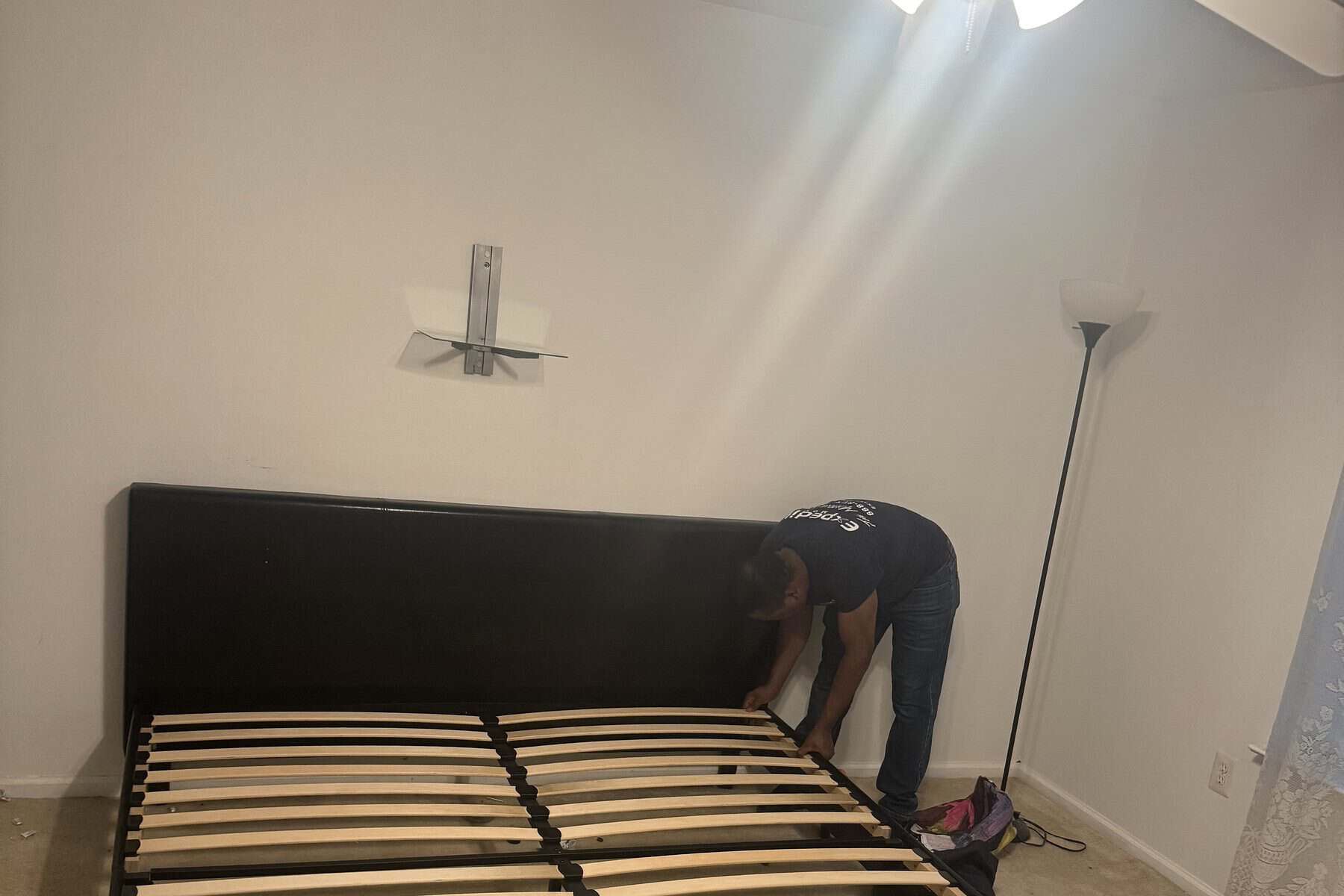
Yes. Beds assembled, furniture placed where you tell us, boxes in the right rooms, and on assisted-living moves the room set up to be lived in. Tell us what "done" looks like and we will get there.
Local moves are $40 per mover per hour plus $75 for the truck — $195 an hour for three movers, $235 for four — with a three-hour minimum and an hour of travel, so the practical floor is about $800. A binding estimate is available when a fixed price matters.
Yes. New Jersey licence 39PC00116900 and USDOT 2491702. Certificates of insurance go to your building, community or facility on request.